

Do Women Fantasise Less Than Men? The Role of Permission, Mental Space, and Sexual Imagination
92I was listening to an episode of Cuck My Life on a long drive recently and something they said stayed with me long after the podcast ended.
They were talking about how many men experience arousal in a very immediate way. A sexual thought appears — something exciting, taboo, or intriguing — and within moments the body responds. The fantasy and the physical reaction can feel closely connected.
It made me realise something.
As a woman, that isn’t really how my mind works.
That doesn’t mean women don’t fantasise. Of course we do. But the relationship many women have with fantasy often feels quite different from the way men describe theirs.
And the more I think about it, the more I suspect that biology is only part of the story.
Spontaneous Desire vs Responsive Desire
In sexuality research, there’s a concept that helps explain part of this difference.
Men often experience what’s called spontaneous desire. Desire appears quickly and internally — triggered by a thought, image, or memory.
Women, more often, experience responsive desire. Desire grows out of context, atmosphere, emotional connection, or stimulation rather than appearing out of nowhere.
In other words, many women don’t necessarily start with the fantasy itself. Desire tends to build in response to something happening around them.
But I don’t think biology tells the whole story here.
The Missing Piece: Permission
One factor that often gets overlooked when we talk about sexual fantasy is permission.
Men have historically been given far more cultural permission to explore their sexuality openly. Their desire is expected. Their curiosity is normalised.
Women haven’t always been given that same freedom.
For a long time, female sexuality has been framed as something reactive rather than self-directed. Something that happens to women rather than something they actively explore for themselves.
And that matters.
Because fantasy requires a certain kind of freedom — the freedom to let the mind wander somewhere purely for pleasure.
If someone has spent years being subtly told that their sexuality should be quiet, modest, or secondary, it makes sense that fantasy might not become a regular mental habit.
The Role of Mental Bandwidth
There’s another practical piece to this as well: mental bandwidth.
For many women, daily life involves a huge amount of cognitive load. Work responsibilities, emotional labour, relationships, family logistics, the invisible mental checklist that keeps everything running.
The brain is constantly occupied.
Fantasy requires something surprisingly simple but surprisingly rare: mental space.
Space where the mind can wander without needing to solve a problem or anticipate someone else’s needs.
When that space exists, imagination tends to flourish.
When it doesn’t, desire often becomes something that emerges only in response to a situation rather than something that appears spontaneously.
Why This Matters in Dynamics Like Cuckolding
This idea comes up quite a lot in my work and in conversations with my audience.
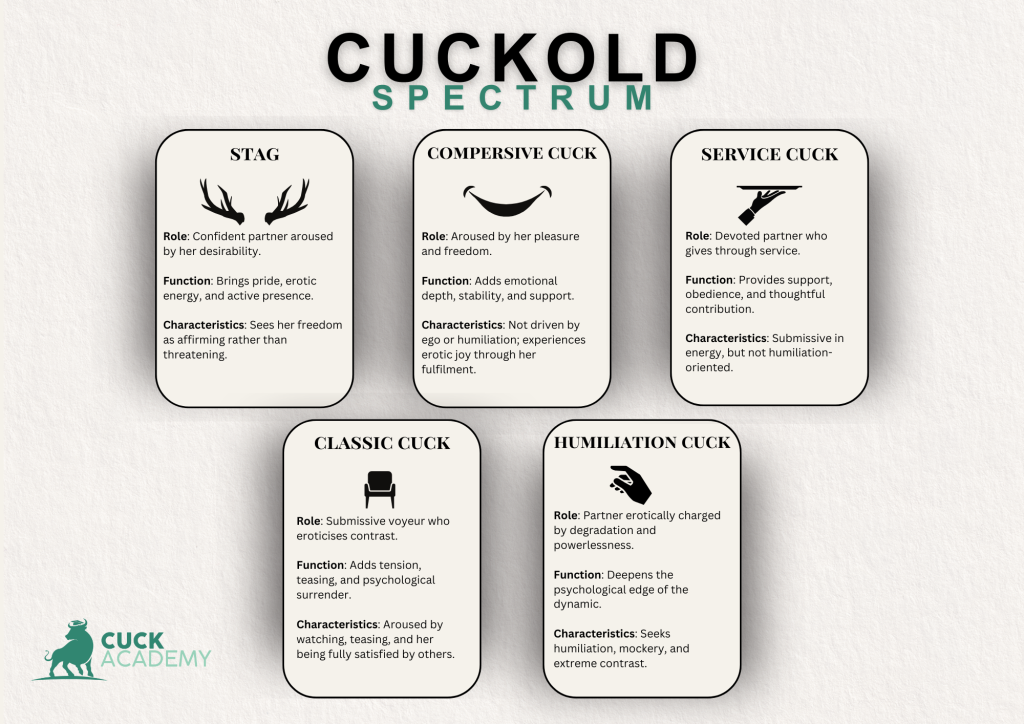
Many men who are drawn to cuckolding fantasies talk about wanting their partner to feel sexually powerful. They want to see their partner embrace her desires, take the lead, and feel confident in her sexuality.
But sexual confidence rarely appears out of nowhere.
It usually develops when someone feels genuinely allowed to explore their own curiosity.
Allowed to think about what they might want.
Allowed to entertain a fantasy without immediately questioning it.
Allowed to prioritise pleasure for a moment instead of everyone else’s needs.
Fantasy, in that sense, isn’t just about sex.
It’s about imagination.
When Women Claim Space for Their Desire
When women begin to give themselves that space, something interesting often happens.
Desire becomes less reactive.
Curiosity grows.
Confidence starts to develop naturally because sexuality is no longer something that only exists in response to someone else.
And that shift can change the dynamic within a relationship in surprisingly powerful ways.
Because sexual confidence — especially when it’s authentic — is incredibly magnetic.
The First Step Toward Sexual Confidence
A lot of conversations about sexuality focus on action.
What people should try. What couples should explore. What fantasies should become reality.
But sometimes the first step toward sexual confidence isn’t action at all.
Sometimes it’s simply giving yourself permission to imagine.
The post Do Women Fantasise Less Than Men? The Role of Permission, Mental Space, and Sexual Imagination appeared first on The Cuck Academy.